Phantom Puffs: A Phantom Lung to Emulate Smoking Behavior

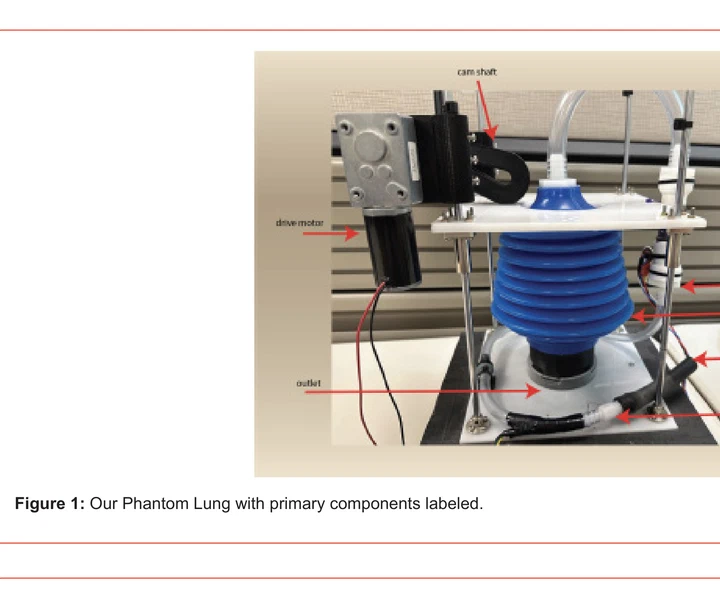 The Phantom Lung with primary components labeled (adapted from Figure 1 of the paper).
Abstract
Testing sensors on human subjects is fraught with challenges such as extensive setup times and inconsistent data collection. This study explores the use of phantom organs as a solution to streamline sensor testing and validation. By replicating essential organ functions, phantom organs can provide a consistent and repeatable testing environment, improving data accuracy and reliability. Our development of a phantom lung, capable of emulating human breathing patterns, exemplifies this approach. This phantom lung could facilitate the testing of ENDS monitoring sensors, allowing for the safe and controlled simulation of smoking combustible and electronic cigarettes. The use of phantom organs not only reduces reliance on human subjects in sensor development but also fosters innovation by allowing experimentation with novel sensing mechanisms. This research highlights the potential of phantom organs to revolutionize sensor testing practices, ultimately accelerating the advancement of sensing technologies in various fields.
Type
Publication
Online Journal of Robotics & Automation Technology
Abstract
Testing sensors on human subjects is fraught with challenges such as extensive setup times and inconsistent data collection. We explore phantom organs to streamline sensor testing and validation, developing a phantom lung capable of emulating human breathing patterns. This provides a consistent, repeatable testing environment for ENDS monitoring sensors, reducing reliance on human subjects while enabling experimentation with novel sensing mechanisms.